
Every weekday, and yes, I am that person, I spend at least 20 to 30 minutes in traffic travelling to and from the office. Like most commuters, I am constantly looking for the quickest route to my office. Most mornings/evenings, that means avoiding the main roads and freeways and cutting through residential suburbs instead.
For years, Out of Home (OOH) planning has been heavily focused on major arterials and highways. The thinking is simple: high traffic volumes deliver maximum reach and strong visibility. Reach remains a critical metric in media planning, and busy roads undoubtedly play an important role in delivering scale. (N1 around 2m VACS depending on the site)
However, I often wonder whether we underestimate the value of the audiences travelling the “back-road” routes. These are the school-run parents, neighbourhood shoppers, local professionals, and community residents who move through suburban environments every day. While they may not be travelling on the busiest highways, they are still valuable consumers making purchasing decisions close to home.
One brand that seems to understand this particularly well is Naked Insurance (saw them this morning).
Over the past few years, Naked and many other advertisers have embraced a format that many marketers have overlooked: street furniture advertising.
So, what exactly is street furniture?
In OOH terms, street furniture refers to advertising placed on public infrastructure such as bus shelters, street pole ads, directional signs, kiosks, benches, and other smaller-format assets integrated into everyday urban environments. These formats are designed to reach people where they live, work, shop, and travel locally. Industry experts recognise street furniture as an important OOH category because it sits within everyday community spaces and provides repeated exposure to audiences moving through those areas. [broadsign.com]
What makes street furniture so interesting is that it meets consumers much closer to the point of decision-making. While a freeway billboard may create awareness, a street-pole ad or bus shelter often reaches someone just minutes away from a shopping centre, restaurant, school, or retail destination. Research shows that proximity-based OOH placements can be particularly effective because they influence consumers at moments when they are actively navigating their surroundings and making choices about where to go next. [broadsign.com]
When I drive through the suburbs, I often notice how uncluttered the media environment is compared with a major highway. On a freeway, a billboard is competing with numerous other advertising messages, traffic signs, and distractions. In contrast, suburban environments generally have fewer large-format advertising structures. This means the humble street-pole ad or branded bus shelter often becomes impactful advertising in these spaces.
In many ways, these smaller formats are the heroes of the suburb. They provide directions while creating brand presence and become familiar landmarks within a community. They are seen daily but the residents of a suburb while travelling the same daily routes, whether that is the school drop-off, the quick trip for bread and milk, work trip.
The power of repetition should not be underestimated. OOH advertising excels because audiences are exposed to messages multiple times as they move through the same environments. According to Nielsen research, consumers spend significant amounts of time outside their homes and commuting, creating valuable opportunities for advertisers to reach them through outdoor media. Nielsen has also highlighted OOH’s ability to drive awareness, purchase intent, and other key brand metrics when effectively deployed. [nielsen.com]
Another advantage of street furniture is its cost efficiency. Compared with large-format billboards, many street furniture formats offer advertisers the opportunity to build a dominant presence within a specific suburb or community at a lower investment level. This allows brands to increase frequency and local relevance without necessarily requiring a large OOH budget. (This would obviously depend on you OOH strat and what you wanted to achieve for your campaign).
Some brands like Naked Insurance, FNB and Pineapple have stood out. Rather than treating the structure simply as an advertising panel, they have often used the entire structure as a branding opportunity, by painting their brand colours on the physical structure itself, this creates a stronger standout to make the asset feel like an extension of the brand. The result is a impactful and becomes difficult to ignore.
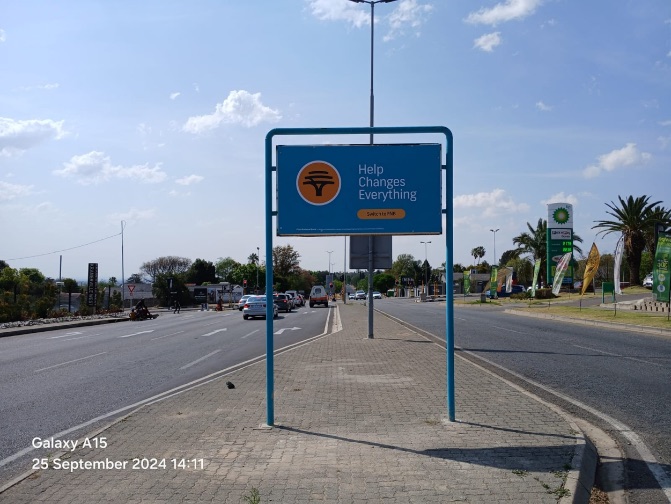
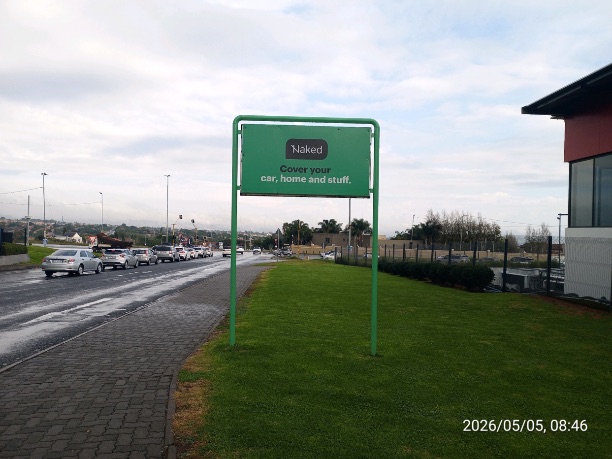

Street furniture unlike online digital advertising channels, outdoor advertising cannot simply be closed, skipped, blocked, or scrolled past. Whether someone is walking to school, waiting for a bus, sitting at a traffic light, or driving through a neighbourhood, the message is part of the environment around them.
Importantly, street furniture operates at eye level. It is positioned within the natural line of sight of both drivers and pedestrians, creating opportunities for engagement.
The OOH industry continues to evolve, with digital screens, enhanced audience measurement, and improved targeting capabilities making the channel more accountable than ever before. In South Africa, media owners have increasingly invested in audience measurement tools that help advertisers understand the reach and impact of their street furniture campaigns. Research from Provantage’s Street Network indicates that street furniture advertising can deliver strong levels of ad recall and consumer action, reinforcing the format’s effectiveness within the broader OOH ecosystem. [bizcommunity.com]
As media planners, we naturally gravitate toward the biggest sites with the biggest numbers. There will always be a place for iconic billboards and high-impact freeway formats. But perhaps the real opportunity lies in remembering how consumers move through their daily lives.
Not everyone takes the freeways and major roads, every day.
Some of us take the back roads, navigate through suburbs, stop at local shopping centres, and pass the same bus shelters and street-pole ads every day. When brands show up consistently in those environments, they become part of the community landscape.
That is why I believe street furniture deserves greater recognition in the modern OOH mix. It may not always deliver the largest audience, but it often reaches the right audience, in the right place, at exactly the right moment.
Sources
- Nielsen – Out-of-Home Media as Marketing Strategy (2019)
- Nielsen – Analyzing Out of Home Impact (2024)
- Provantage / Street Network – Audience Measurement for Street Furniture Formats (2023)
- Broadsign – What is Out-of-Home Advertising? (2026)
- Primedia Outdoor
- JCDecaux