
For years, Out-of-Home (OOH) played second fiddle to larger, more data-rich channels like TV, radio, online, and print. Historically under-reported by organizations like Nielsen, OOH has battled structural fragmentation, with hundreds of independent media owners rarely inclined to collaborate.
However, the landscape is undergoing a dramatic resurgence driven by the rapid growth of Digital Out-of-Home (DOOH) and enhanced industry data. While the sector is thriving, its long-term success depends heavily on how the industry navigates its next phase of maturity.
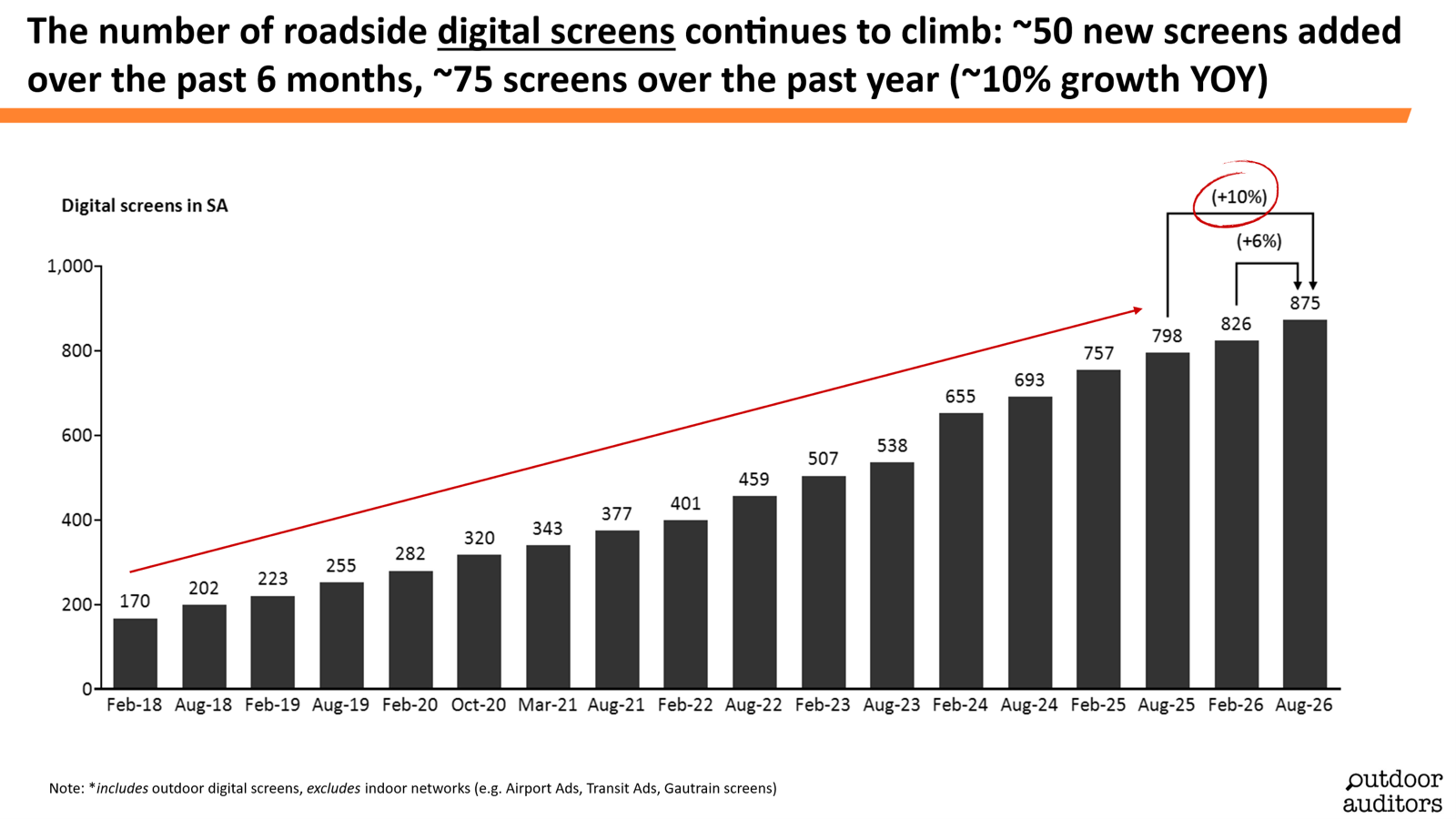
The Rise of DOOH and Market Growth
A primary catalyst for this renaissance has been the explosion of DOOH. Roadside digital screens have multiplied significantly, with approximately five times as many screens operating compared to February 2018. This expansion has transformed the market by:
- Multiplying Inventory: Each digital screen can easily absorb multiple brands.
- Attracting New Spend: DOOH successfully captures budgets from both traditional OOH allocations and broader digital marketing pools.
Consequently, OOH is experiencing record-high estimated spending, robust static occupancy rates, and an influx of new brands. However, this window of opportunity is fragile. If advertisers lose confidence, DOOH budgets risk migrating back to online, mobile, or television platforms. Two major hurdles threaten this trust: illegal sites and digital non-compliance.
1. The Challenge of Illegal Sites
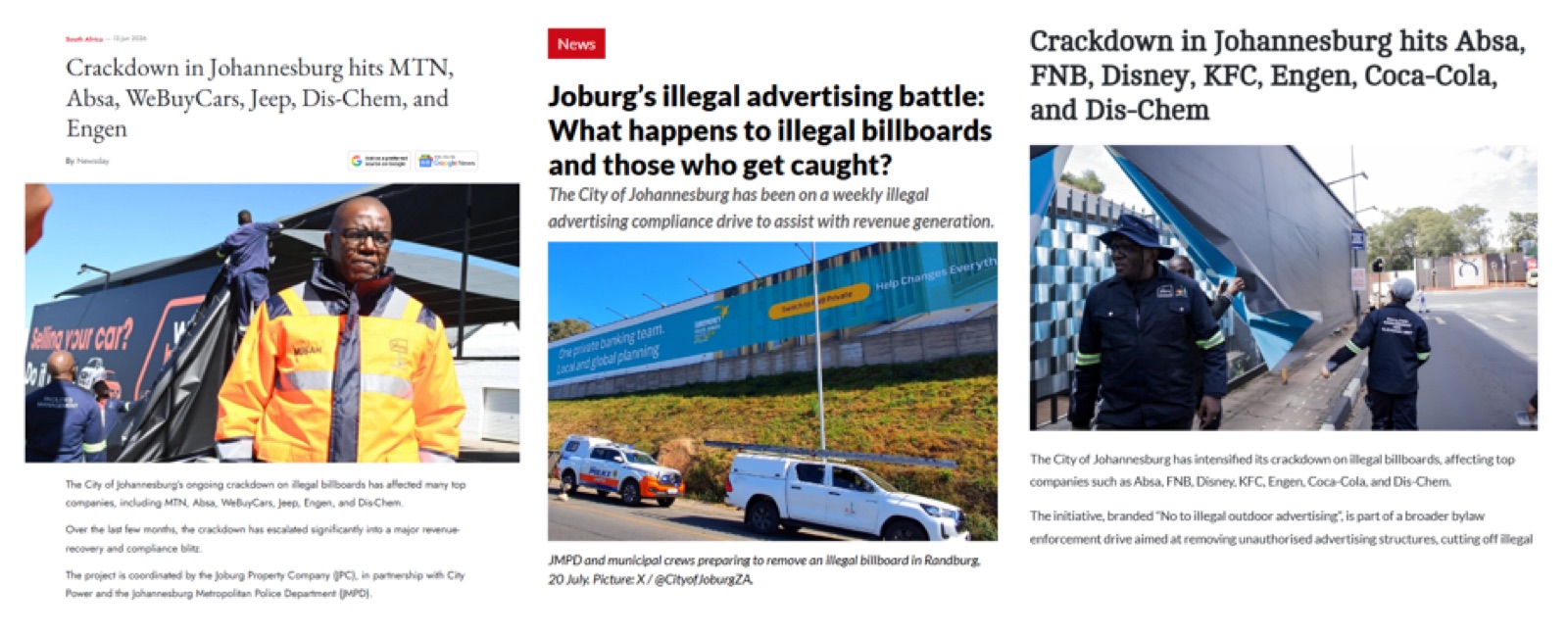
Recent municipal crackdowns—particularly prominent in Johannesburg—have thrust unauthorized billboards into the spotlight. Operating illegal sites carries severe industry-wide consequences:
- Erodes Value: Unauthorized structures bypass compliance costs and tariffs, allowing operators to undercut legal inventory.
- Strains Relations: Municipalities lose vital revenue, leading to hostile regulatory environments and delayed approvals.
- Increases Risk: Brands face heavy PR and legal exposure when associated with non-compliant structures.
- Creates Hazards: Unverified builds often ignore safety, setback, and structural engineering standards.
The Solution: Transparency
While the issue cannot be fixed overnight, the industry can champion transparency. By sharing site approval statuses, media owners empower agencies and brands to make informed choices that align with their risk appetite. Pioneering media owners are already sharing this data via our online planning tool, setting a new benchmark for accountability.
2. Digital Non-Compliance & Verification
Unlike static billboards—where a physical photo easily confirms execution—DOOH relies on dynamic variables like play counts, time-of-day scheduling, and artwork rotations. Without 24-hour verification data, missing ad rotations erode brand trust and drive spending away from OOH.
The Solution: Independent Verification
Advanced third-party verification platforms, such as our partnership with Seedooh, now offer real-time campaign validation. With ~45 verified media owners already onboard, major financial institutions, FMCGs, tech giants, and QSR brands are utilizing independent verification to secure their digital investments.
How You Can Help
- For Brands & Agencies: Utilize available compliance data to make informed decisions and actively encourage media partners to embrace transparency.
- For Media Owners: Recognize that long-term sustainability relies on collaboration, openness, and verified accountability.
Note: For detailed metrics and background data, reference the August 2026 edition of the State of OOH Report.