
Out-of-home (OOH) advertising is often discussed in terms of scale: bigger formats, greater visibility and broader reach. But the value of an outdoor campaign is not determined by size alone. Where an advert appears, how it fits into its surroundings and how it supports the wider media strategy all matter.
Street furniture brings a different strength to the OOH mix. Bus shelters and advertising bins connect brands with consumers along everyday routes, in residential suburbs and close to local destinations. These formats help brands maintain a presence in the places where people live, work, shop and move through their communities.
As media planning becomes more focused on audience relevance and effective use of investment, street furniture has an important role to play. It can complement larger formats, reinforce campaign messages and offer brands opportunities to connect with consumers closer to home.
For Street Network, with 25 years of experience and more than 6,000 advertising faces across South African cities, towns and suburbs, this is where the everyday value of street furniture comes into focus.
1. PROXIMITY OVER SIZE: CONNECTING BRANDS WITH EVERYDAY ENVIRONMENTS
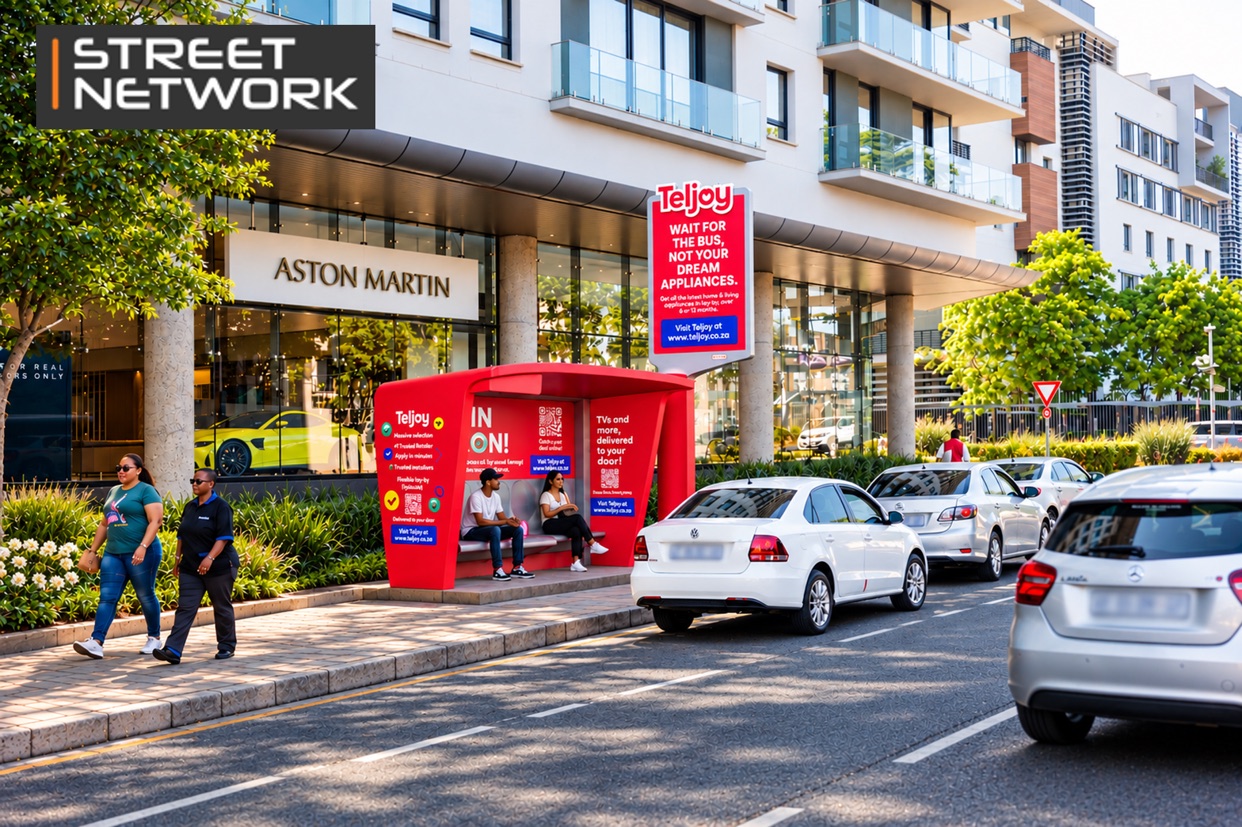
Large-format outdoor advertising can establish a brand’s presence across a city. Street furniture adds another dimension by bringing that presence into the everyday environments people move through.
A bus shelter can put a message along a familiar commuter route. An advertising bin can introduce a brand into a suburban street. These formats give advertisers opportunities to build local relevance and maintain visibility beyond major roads and prominent landmarks.
The strength lies in the location as much as the advertising face itself. As John Faia, General Manager of Street Network, explains:
“They act as mini billboards on the side of the road. They’re eye-level, they’re unskippable and it’s one of their biggest strengths.”
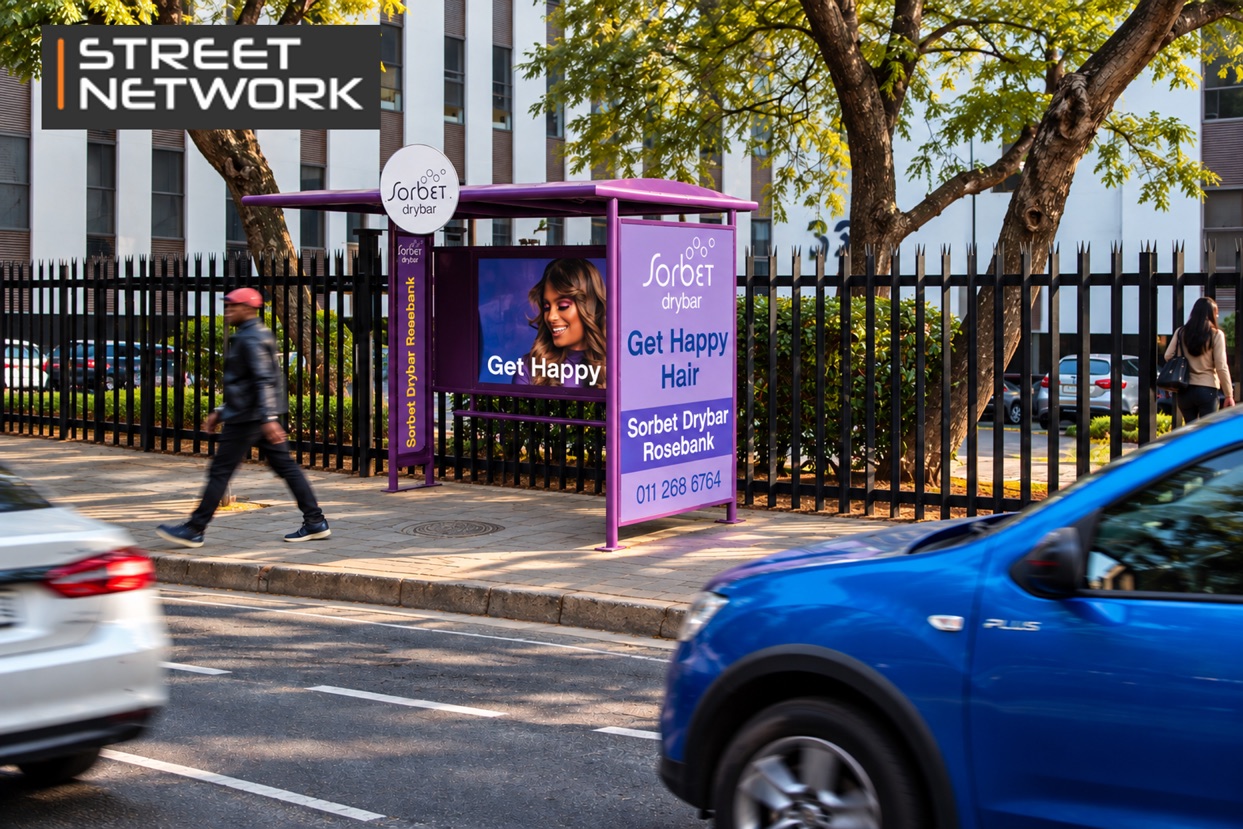
This everyday presence can be particularly valuable for brands looking to connect with specific communities or strengthen their visibility around local destinations.
“Any brand that needs people to see them and get a message across. But it’s also about location, location, location. We really drive the strength of being hyper-local with our bus shelters. It gives brands an opportunity to extend their footprint and their voice and talk to consumers before they get to that point of purchase.”
Location is only part of the planning equation, however. Advertisers also need to understand the audience opportunity behind the advertising face.
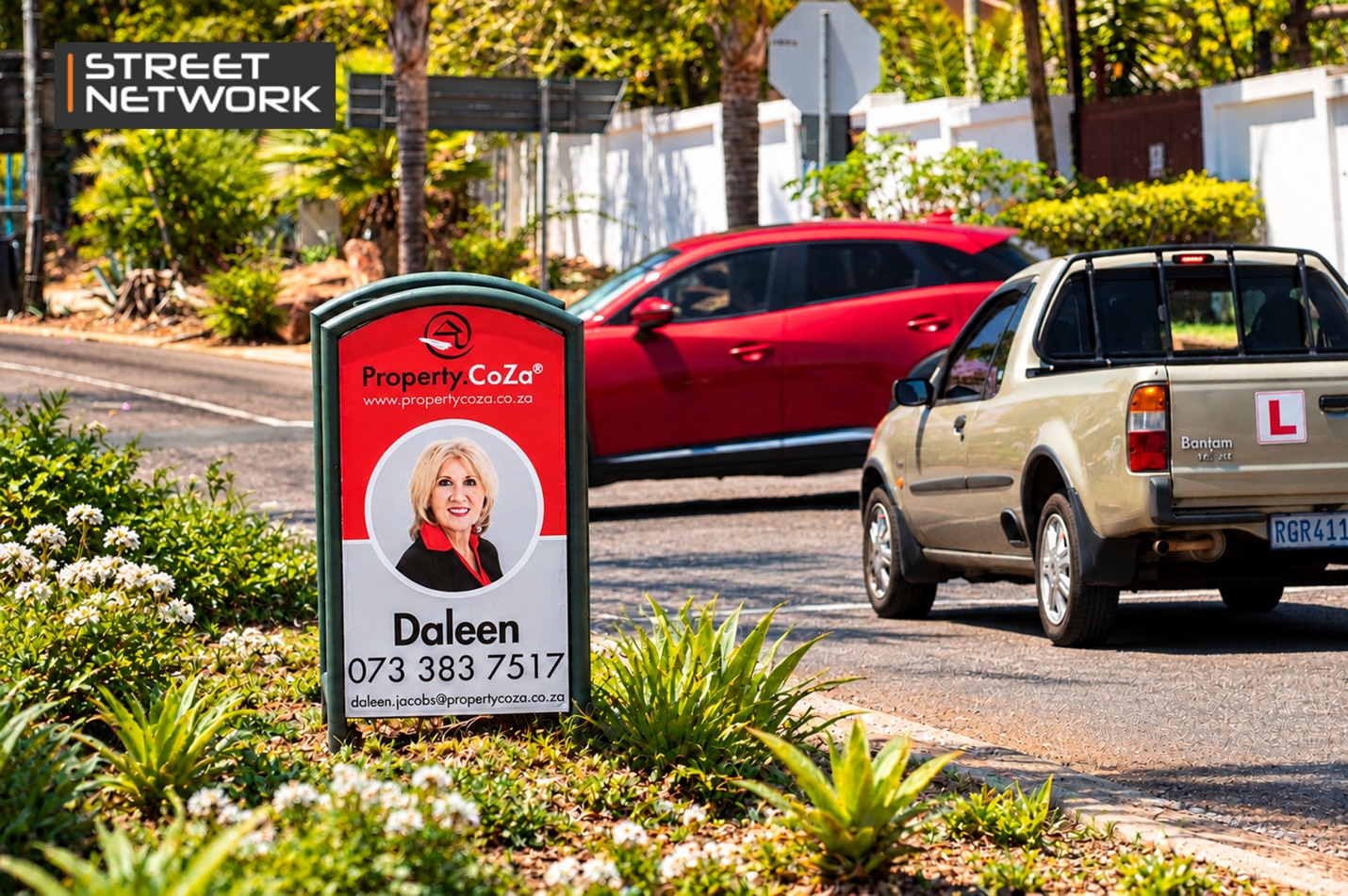
Measurement is becoming an increasingly important part of OOH planning. Understanding who a site can reach, how many people it may reach and how a campaign performs can help planners make better-informed decisions. Street Network has invested in audience measurement across its bus shelter inventory, incorporating Lightstone data to strengthen the audience insights available to planners.
By combining strategically located media with audience data, planners can make more informed choices about where street furniture fits within a campaign and how it supports broader objectives.
2. COMPLEMENTS, NOT COMPETITION: MAKING THE WIDER OOH MIX WORK HARDER
Street furniture should not be viewed as a replacement for larger OOH formats. Its value often comes from how it works alongside them.
A billboard can establish broad visibility and introduce a campaign message. Street furniture can reinforce that message along local routes and within the communities the campaign wants to reach. Placements closer to shopping destinations can then help maintain brand presence as consumers move through their day.
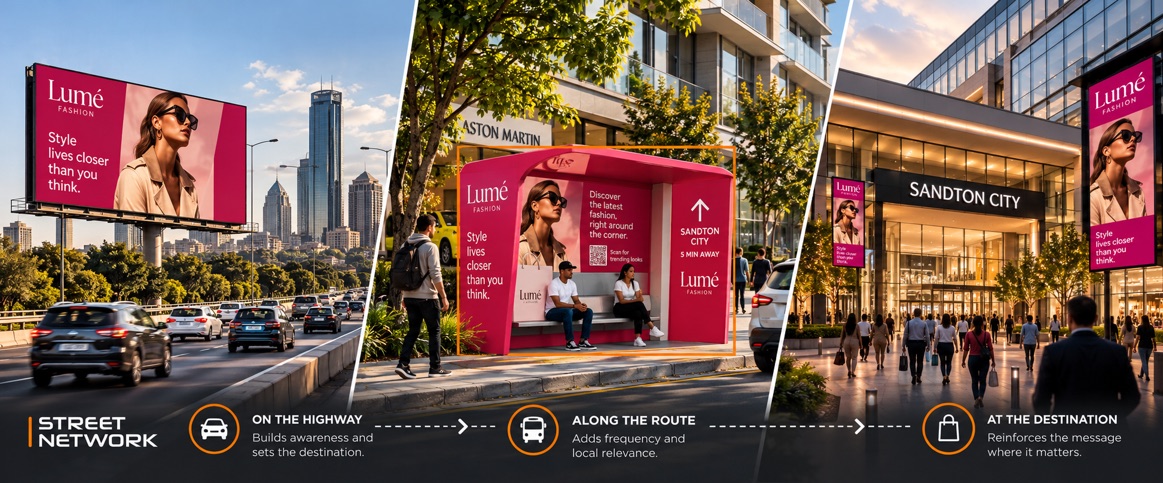
ILLUSTRATIVE OOH MIX STRATEGY — NOT AN ACTUAL CAMPAIGN. This conceptual mock-up demonstrates how Street Network’s strategic sales team can integrate street furniture into a broader OOH plan to build reach, reinforce messaging and add local relevance across the consumer journey
Consider a fashion brand launching a new seasonal collection. A large billboard could introduce the campaign across a major route. Bus shelters could carry the message into surrounding suburbs, while advertising in a shopping environment could reinforce the same creative closer to retail destinations.
Each format has a different role. Together, they can create a more connected campaign experience.
This approach also gives media planners more ways to think about frequency, geographic coverage and creative consistency. Rather than treating each format as a separate purchase, they can consider how different environments work together to support the campaign objective.
The right mix will depend on the audience, budget, location and desired outcome. A campaign focused on broad awareness may require a different balance from one designed to strengthen presence in selected suburbs or around specific destinations.
The opportunity is to plan beyond individual advertising faces. By considering how formats complement one another, brands can use street furniture to add local relevance and reinforce the wider OOH message.
3. BEYOND THE ADVERTISING PANEL: EVOLVING EVERYDAY INFRASTRUCTURE
Street furniture also creates opportunities to rethink what everyday urban infrastructure can offer.
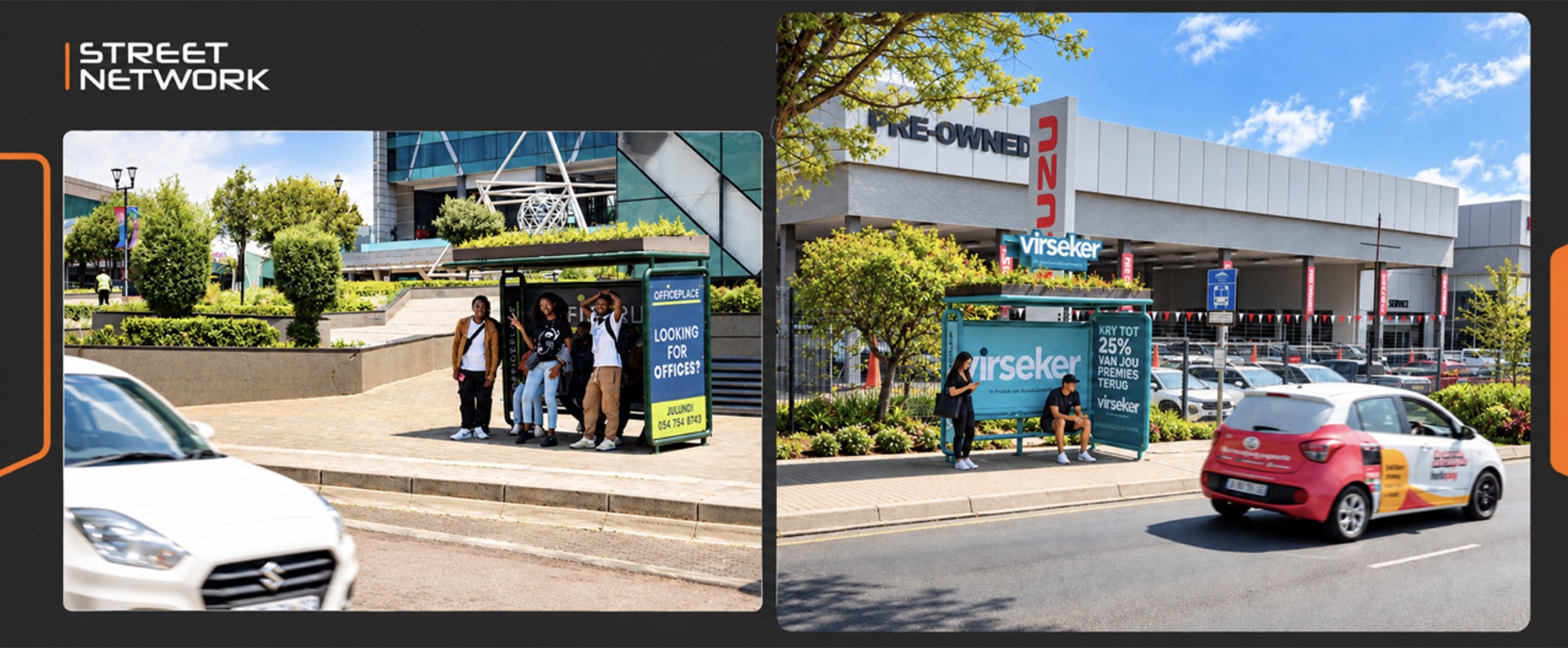
Street Network Roof Top Garden Bus Shelters. Greener roofs. Greater impact. First rollout across the City of Tshwane.
The Roof Top Garden Bus Shelters by Street Network demonstrate how a familiar advertising format can evolve beyond the conventional panel. The initiative introduces rooftop greenery to selected bus shelters, bringing a different visual element to the streetscape while creating a distinctive platform for brands.
The rollout across City of Tshwane routes includes areas such as Menlyn, Lynnwood, Centurion, Brooklyn, Wierdapark, Montana, Lyttelton and Equestria. The rooftop gardens incorporate Spekboom (Portulacaria afra), a plant known for its ability to thrive in South African conditions.
The concept adds another dimension to the role of street furniture in the urban environment. Instead of serving only as a place for advertising, a bus shelter can become part of a broader conversation about how public-facing infrastructure looks, functions and fits into its surroundings.
For advertisers, this creates a distinctive opportunity to associate their brands with an evolving format. It also opens the door to conversations around sponsorship and naming rights, subject to the opportunities available within the rollout.
The value of this innovation lies in its ability to combine an established media format with a fresh approach to the streetscape. It shows that street furniture can continue to develop while retaining its core role: connecting brands with people in the places they pass through every day.
THE EVERYDAY IMPACT OF STREET FURNITURE
The OOH landscape offers brands many ways to build visibility. The challenge for media planners is to understand how those opportunities work together to reach the right audiences and support campaign objectives.
Street furniture earns its place through proximity, local relevance and its ability to complement the wider media mix. Audience insights can strengthen planning decisions, while new approaches to infrastructure can create fresh opportunities for brands and communities.
The question is not whether scale or proximity matters more. It is how the two can work together.
For Street Network, the everyday impact of street furniture is found in connecting brands with consumers as they move through the streets between where they live, work and shop.